Rinnai Hot Water Heat Pumps are efficient water heating solutions developed using the latest in heat pump technology, to help Kiwi families save on energy.
Whether you’re building, renovating or simply replacing, your choice of a water heating system can make a big difference in your power bills. With increasing energy prices and a greater awareness of our environmental footprint, it’s no wonder more Kiwis are making the switch to Hot Water Heat Pumps.
If you’re looking into a Hot Water Heat Pump, our Buyer’s Guide explains everything there is to know about how they work and choosing a system that best suits you.
A Hot Water Heat Pump, or Heat Pump Water Heater, uses heat pump technology to efficiently heat up water, which is then stored in a cylinder.
It operates by extracting heat energy from the surrounding air, which warms the water in the cylinder. It is then supplied into your home or property through the piping.
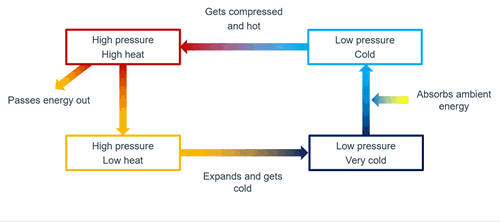
A Hot Water Heat Pump works according to the following key steps:
1. Heat Absorption: The Heat Pump draws in ambient air from its surroundings, even in colder climates. This is because energy (heat) will always move from where it is, to where it is not.
2. Heat Exchange:The heat pump extracts heat from the air and transfers it to a refrigerant fluid, which evaporates into a gas.
3. Compression: The refrigerant is compressed, which increases its temperature.
4. Heat Release: The hot, pressurised refrigerant releases its heat into a heat exchanger, which transfers the heat to the water.
5. Condensation: The refrigerant changes back to its liquid state and cycles back to the beginning of the process.
Energy Efficiency | Hot Water Heat Pumps are significantly more energy-efficient than traditional electric or gas water heaters, because they draw on the surrounding air for heat energy. With Heat Pump technology, heat energy is transferred to the unit and heats the water in the cylinder or tank. This consumes less electricity than your typical electric cylinder, which is not only better for the environment but also helps you save money on hot water costs. |
Sustainability | Hot Water Heat Pumps reduce greenhouse gas emissions and dependence on fossil fuels through their use of heat pump technology. Rinnai’s Hot Water Heat Pumps also use R290 refrigerant, which is a natural, environmentally friendly refrigerant with a low Global Warming Potential (GWP), offering an even more sustainable alternative to traditional refrigerants used in other Hot Water Heat Pumps. |
Versatility | Hot Water Heat Pumps work well in different climates, even cold ones, because they aren’t dependant on outdoor temperature changes. This adaptability makes them suitable for a wide range of locations – including all across New Zealand. The Rinnai HydraHeat® Integrated is also uniquely versatile because it will continue to work and operate as an electric cylinder, even when the heat pump head is being serviced or turned off. |
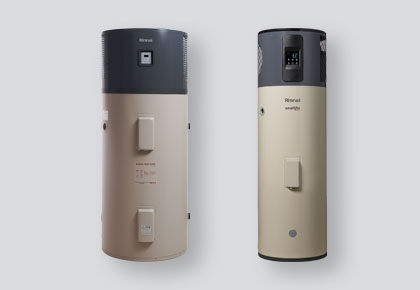
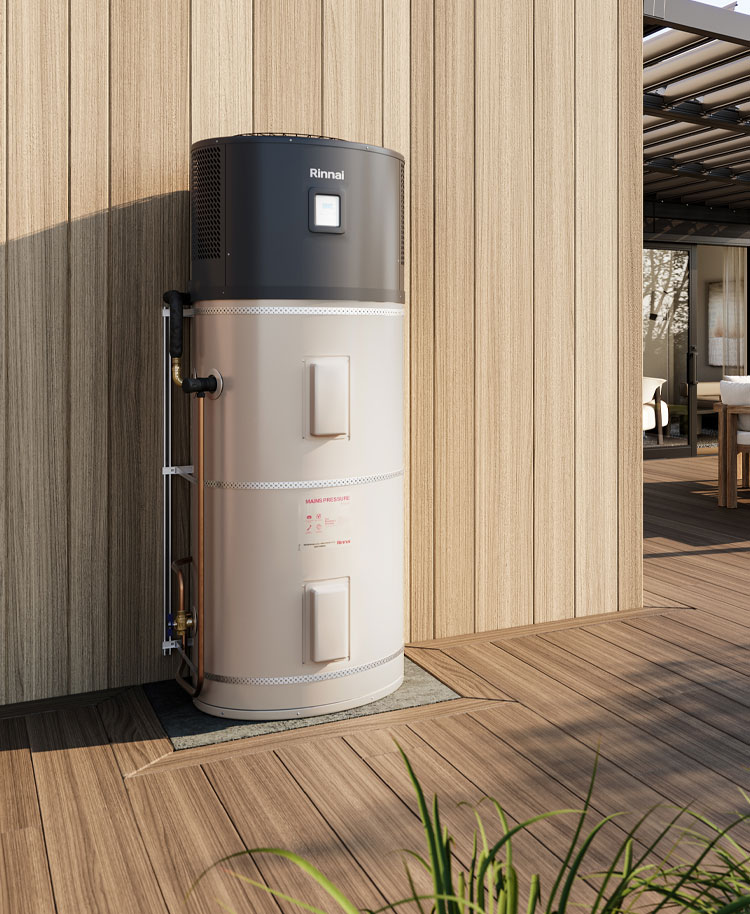
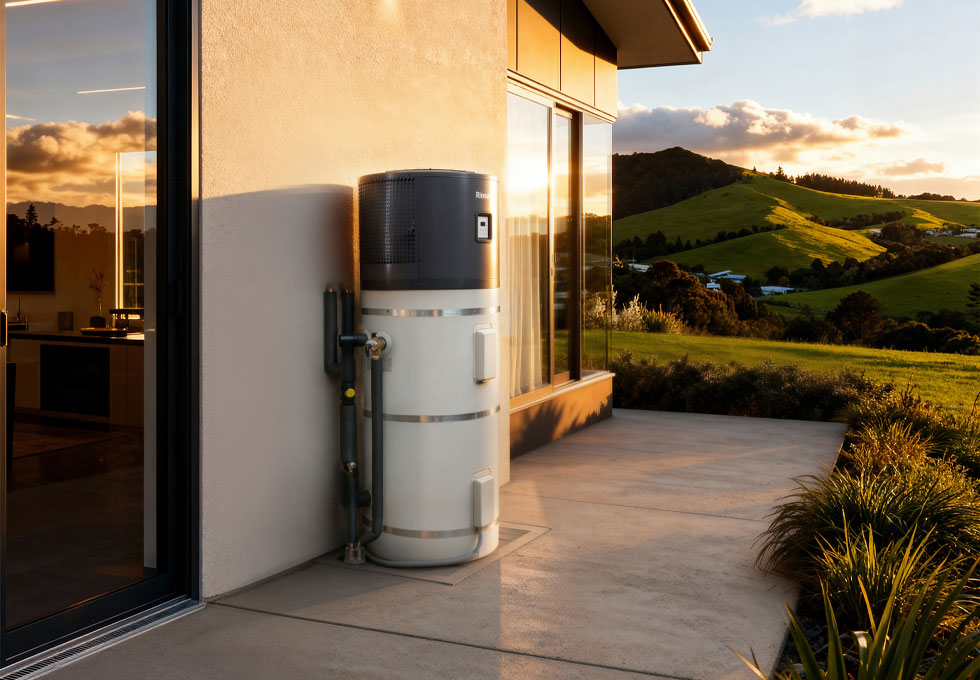
The Heat Pump and the hot water cylinder are combined in a single unit which is installed outside. This can potentially offer easier installation for some households depending on the current layout of their plumbing.
These systems are ideal for detached or medium density homes with outdoor spaces.
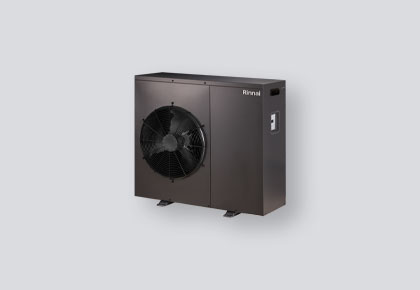
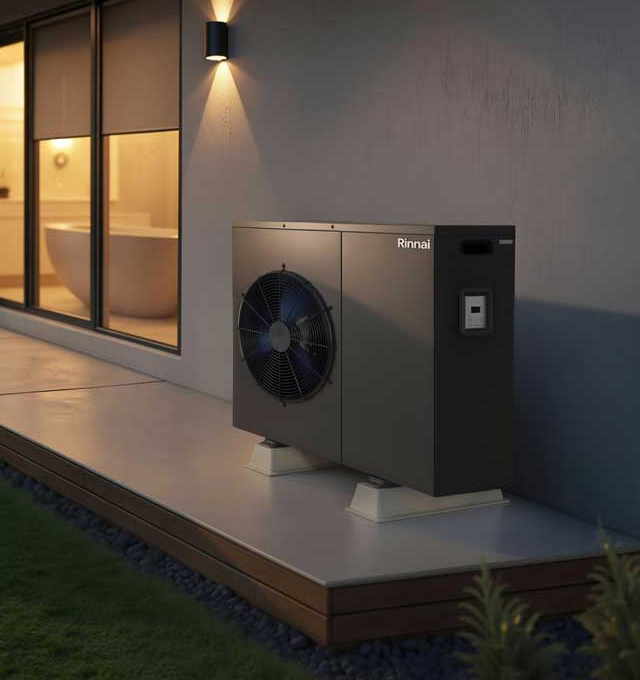
This consists of a separate outdoor Heat Pump unit with either an indoor or outdoor hot water cylinder, depending on the availability of space. This may allow the cylinder to be placed closer to hot water consumption areas.
The flexible placement makes split systems ideal where space is limited.
Rinnai Hot Water Heat Pumps come in a range of sizes to suit most households, from 215L to 340L. Our Split Hot Water Heat Pump works for 180L to 340L.
Capacity | Choose the right cylinder size based off your household’s hot water usage. You can use our hot water calculator here, which can help you figure out the capacity of the system that best suits your home. As a rough guide, a 215L cylinder will suit a 2-4 person household, 265L & 275L cylinders will suit up to 5 people, a 300L cylinder up to 6, and a 340L cylinder up to 7. |
Energy Efficiency | The Hot Water Heat Pump’s Coefficient of Performance (COP) will show you how energy efficient it is. This number measures the amount of heat energy produced for every unit of electricity used – a higher COP means greater efficiency. For example, a COP of 3 means that the unit produces 3kWh of heat output per 1 kWh electricity input. The HydraHeat® Integrated has a COP of 4.7, the HydraHeat® Split has a COP of 4.6. |
Warranty & Support | Choose an appliance with a strong warranty & reliable after-sales support. For example, the Rinnai HydraHeat® Integrated has a 7-year cylinder warranty and a 5-year heat pump warranty – plus its modular design allows it to be serviced or repaired without disrupting your supply of hot water. |
Noise | The operating noise levels of a Hot Water Heat Pump can be an important factor, especially if your system is close to certain bedrooms or you have neighbours within close proximity. If this is a concern, it is best to check the decibel ratings for each appliance. Rinnai’s integrated and split systems operate between 37–50 dB(A) — comparable to a modern dishwasher. |
Solar Compatibility | Certain models of hot water heat pumps are compatible with solar PV systems, allowing you to save even more on power. The Enviroflo™ GR Series is a Solar PV compatible hot water heat pump. |
Space Requirements | Ensure that you have enough space outside to meet the clearances for installation. |

After considering these factors, you can start looking at which specific Hot Water Heat Pump you’d like. With a range of models suited to different household sizes and climates, you can find the perfect system in Rinnai’s range to meet your needs.
The Rinnai HydraHeat® Integrated is a one-of-a-kind Hot Water Heat Pump – designed in New Zealand, specifically for Kiwi homes and conditions. It is made up of two parts – a powerhouse top unit which uses heat pump technology to extract thermal heat energy from the air, and an electric cylinder that works in conjunction with the head. It can also operate by itself as a standard electric cylinder if needed.
The Rinnai HydraHeat® Integrated comes in two sizes – 275L, suitable for homes of 2-5 people, and the 340L which is suitable for 2-7 people. With an operating sound level of only 45dB(A), it’s perfect for a wide range of homes, including those in built-up residential areas.
The Rinnai HydraHeat® Split Hot Water Heat Pump is our versatile solution for both new and existing hot water cylinders – bringing the efficiency of Heat Pump technology without having to install a brand new cylinder. Its split design allows for flexible installation, and can easily be retrofitted to upgrade your current water heating system – cutting waste, reducing costs and maximising performance all at the same time.
The external Heat Pump unit draws from the air outside to heat cold water from the bottom of your cylinder, and then delivers it back to the top of the cylinder for fast top-down heating and ensuring you have hot water right when you need it.
The Rinnai Enviroflo™ GR is an economic yet efficient integrated Hot Water Heat Pump system, delivering fast, environmentally-friendly water heating at an entry level price point.
To further help you save on power, it’s solar PV compatible, and comes with the ability to set timers to take advantage of cheaper, off-peak electricity, reducing the running cost of the unit.
The Enviroflo™ GR is available in 215L, 265L and 300L capacities to suit homes between 2 to 6 people.
A Hot Water Heat Pump will usually have a higher upfront cost than a traditional gas heater or electric cylinder, with the unit being more expensive. It is important to remember that they provide significant long-term savings on your power bill over the lifespan of the product, which will allow the unit to pay for itself – usually within 7 years.
New Zealand banks may also offer financing options that make investing in a Hot Water Heat Pump more affordable.
Q: How much can I save on my energy bill with a Hot Water Heat Pump?
A: On average, you can reduce your hot water heating costs by up to 75%, depending on your usage and the efficiency of the unit.
Q: Can I use a Hot Water Heat Pump in cold climates?
A: Yes, modern Heat Pumps are designed to work efficiently in a variety of climates, including cooler regions. The Rinnai HydraHeat® Hot Water Heat Pump has actually been specifically designed to withstand New Zealand climates and temperatures.
Q: How long does a Hot Water Heat Pump last?
A: With proper maintenance and servicing, a Hot Water Heat Pump can last 10 to 15 years or more.
Looking for a versatile and energy-efficient way to heat and cool multiple rooms in your home? A Rinnai Pro Series Multi Split Heat Pump System
Thinking about installing a hot water heat pump? Here’s the short answer: You’ll need a licensed plumber, a certified electrician, and a suitable installation site.